Thursday, October 27, 2011

Autumn Surprises at Hammonasset Beach State Park in Madison, CT

This week I found myself driving through Madison, Connecticut, and when I passed the turnoff for Hammonasset Beach State Park, I noticed a sign for their Nature Center at Meigs Point.

That was enough to convince me to make a U-turn and drive down there on a partly cloudy, and not-too-cool late October day. I thought I had been to this park several years ago, but if so, what I found this day was nothing like my memory.

The place is huge, and there are three separate beach entrances with their own parking lots and shelters, so you have your pick of what spot on the 2-mile stretch of beach you want to enjoy. If you're not into sand and surf, there are hiking and biking trails, seasonal camping, fishing, and of course the Nature Center.


Since the Nature Center brought me in, I followed the signs to Meigs Point, the farthest area from the entrance, the southernmost point of the park where it meets Long Island Sound. There is a boat launch is this area, and I first explored the high rocky outcropping which the informational signage revealed to be a "recessional moraine," or a mass of rocks left behind by a retreating glacier.

Hammonasset describes their glacial boulders as "dump truck sized." For all you budding geologists out there, the glaciers long ago advanced as far south as Long Island before they retreated back along southern New England. So our coastline has a lot of deposits of massive boulders that were created during this retreat.


After I explored the view from the edge of Meigs Point, I followed a trail down the hill to the beach, where to my surprise I discovered beach roses, fragrant as they are in June, still blooming in earnest next to red-orange rose hips formed after earlier blossoms expired. Nothing brings me joy faster than seeing and smelling these wonderful beach roses.


Next, I snooped around the Nature Center. Here is a photo of the building:


Behind the building is a wonderful garden where I found monarch butterflies happily slurping nectar from the purple blooms on the butterfly bushes.


There are also walking trails, birdhouses, and some cool seashell sculptures on the grass. These were created by Chan Davis in 1986, and measure at least 4 or 5 feet across. You could sit a small child upon one. Since I was alone, I couldn't take a photo of myself beside one to show scale in the picture below.


This Nature Center is a neat little gem, an attraction within the park attraction. I love what I saw carved into driftwood on their front porch.


Further on, at one of the beach parking areas, I saw abundant juniper berries clustered on the tips of the evergreen branches. Such beautiful color!


I also saw a typical autumn sight around here, the yellow and red-orange of bittersweet berries, although this might be the first time I've seen bittersweet growing in sand!


I might also add that I evaluated the beach at each of the three points of entry, and I already figured out my favorite. I must say, the beach seems to have adequate width, good sand, and clean water, but I suppose I would have to confirm all this during high season.

The only thing that I did not like, which is not related to the park itself, is finding a bunch of balloons washed up on shore. There were three tied together, two of them partially inflated. There was the name of a high-end real estate firm stamped on the latex. Who knows how the balloons got loose. I popped the two inflated balloons before removing the whole thing from the beach, because floating balloons are very dangerous to sea life when, for example, sea turtles might mistake them for jellyfish.

If you enjoyed this post about Hammonasset Beach, read yesterday's post about the butterflies at Harkness Memorial State Park in Waterford, CT. And for more information about Connecticut shoreline parks and beaches, my beach eGuide is available at the Beach Bath And Trash website.

What are you finding at your local state parks this fall?

Wednesday, October 26, 2011

Butterflies Galore at Harkness Memorial State Park in Waterford, CT

Autumn in southern Connecticut hasn't been as spectacular this year because a lot of foliage near the shoreline died early or was damaged by the salt spray from tropical storm Irene at the end of August.

But I've made a couple trips recently to area state parks and was happy to see so much other living beauty that I forgot that there isn't much to look at as far as fall foliage.

This post will focus on the first journey, to Harkness Memorial State Park in Waterford, Connecticut.


I have loved Harkness since the first time I ever went there, in the late 1980s. There is a small beach; a wide expanse of lawn where families enjoy kite flying and picnics; the remains of the Harkness estate buildings, which includes a seaside mansion available for weddings and other functions; and formal and cutting gardens that add to the picturesque beauty. Not to mention the acres and acres of marshland and other property.


(The loggia near the mansion's formal garden)


(One of several garden gates at Harkness.)


(The old pet cemetery under century-old Japanese maple trees.)

The day I visited was a rare fall day without excessive wind off the water. I remember a few years ago when I took the mansion tour that the guide said Mrs. Harkness detested the fact that it was often so windy there. I think I would agree if I had to live on that property, as shore points can be bitterly cold or uncomfortable because of the wind sometimes.

My plan was to explore the beach first, and I was glad to do so because they had just fixed the damaged boardwalk the prior week, one of the casualties of Irene. I walked the length of this short, sandy beach to the rocky, less popular end, and was amazed to discover two things:

1) The most ginormous amount of slipper shells I have ever seen in my life, and

2) A creative use of them, thanks to somebody named Adrian.

First, a look at part of the mass of shells:


Here is a closeup shot of the slipper shells (click to photo to make it even bigger!):


Then I turned around and saw that somebody had used piles of these thumb-sized shells to form a heart in the sand. Inside it said "Adrian" and something else below that, but I couldn't figure it out. It was so great to see the love on this remote end of the park! (Click on the heart to zoom in.)


I left the beach area to head back to the lawn and saw a few monarch butterflies gathered on some wild asters growing beside the marsh grasses. Being well into October, I was surprised to see so many butterflies still hanging around, but then I figured they probably know more than I do!

The butterflies must know that they are safe, since they go about their business and don't seem afraid of people going right up and touching them! How often does that happen in your backyard?
I continued on, to the formal and cutting gardens near the mansion, and found more...and more monarch butterflies!


(The cutting garden in full bloom.)

Butterflies on dahlias, butterflies on chrysanthemums, butterflies on straw flowers!


I am so happy with these photos I got!


I'll save the best photo for last:


Which just goes to show you that sometimes the best fall colors have nothing to do with tree foliage!

Check back tomorrow for my post about my visit to Hammonasset Beach State Park in Madison, CT. More surprises await!

And for detailed information about Connecticut parks and beaches, my eGuide is available at the Beach Bath and Trash website.

Cheryl

Monday, July 18, 2011

What is a Dugong?...and...Manatee Love

A dugong is a mammal of the Indian Ocean. It's a type of sea cow that closely resembles what Americans know as the manatee. The dugong's cousin, the manatee, is different in physical characteristics and distribution.

Manatees and dugongs inhabit opposite sides of the planet. There are three species of manatees that are found along the coastlines and rivers of Atlantic, Caribbean, Gulf, and South American areas.

Then there are West African manatees, which live along the central part of the west coast of Africa, and in that continent’s inland rivers. (The kind found in Florida and the Caribbean, in Mexico along the Gulf coast, and along the northern coast of South America are considered West Indian manatees.)

I love manatees and am eager for the day when I can share up-close moments with them in person. It would be a lifetime treat to get to see a dugong in the wild, as I don't have any plans to visit areas of the Indian Ocean where they live.

I know some of my readers are in Florida, so let me tell you...I am so envious how many opportunities you have to visit manatees. Last summer, though, a manatee was spotted in a marina here in Connecticut, and it also happened the previous fall, but it is quite an unusual occurrence this far north. Often those northward wanderers encounter problems getting back to Florida, and are monitored by the Save the Manatee Club in Maitland, Florida.

One day I will adopt a manatee (or two) through the club. Each animal has its own history and it's so hard to decide which one to adopt! It would be nice to visit some and adopt in person!

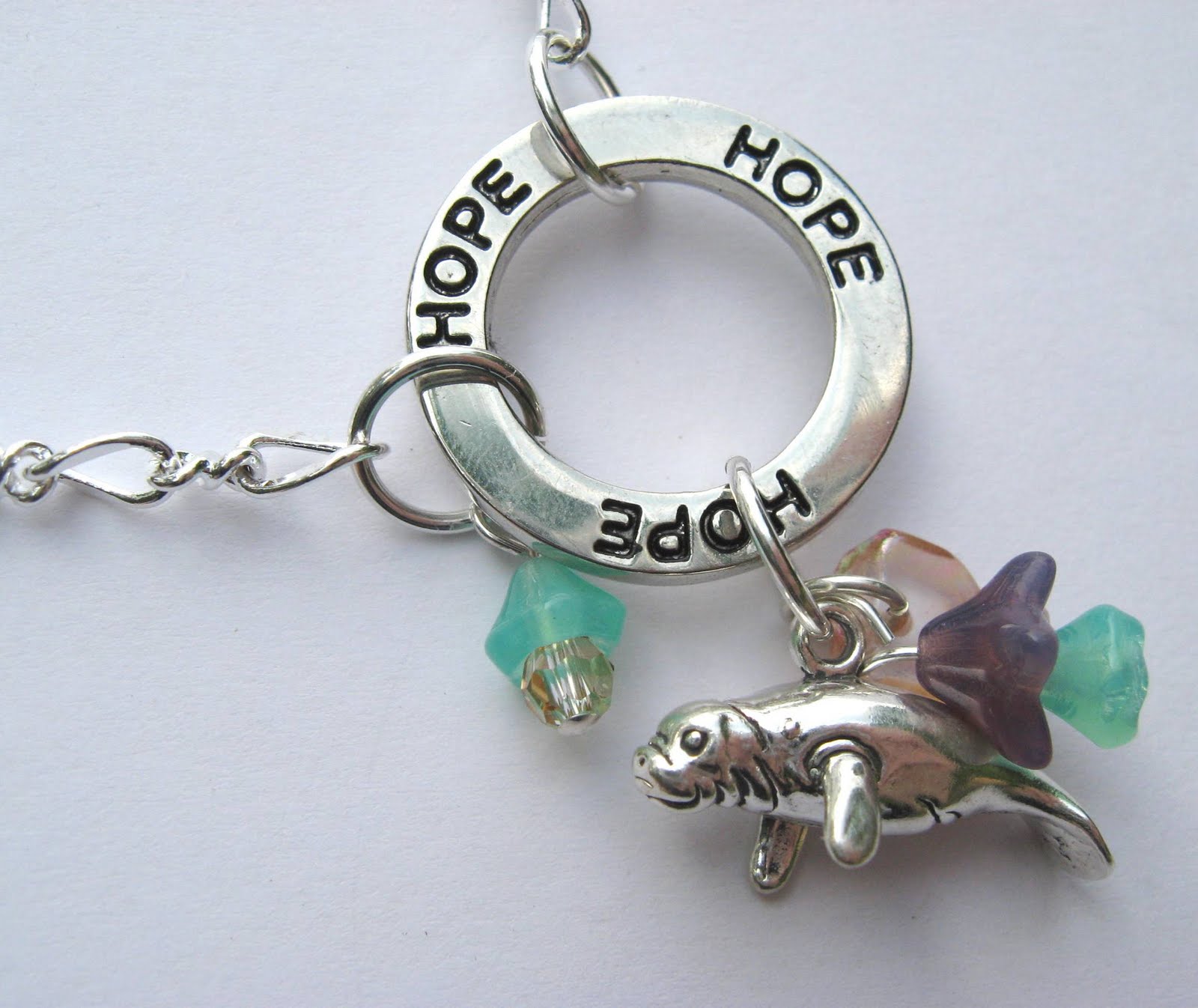
When the Gulf oil spill occurred, an Etsy shop opened up to raise funds for disaster relief, and I made a manatee necklace to donate. I am so glad that the recipient of my necklace enjoyed it because of her love for the manatee, and that our collective love for the manatee resulted in the proceeds of our effort going to help all plant and marine life in the affected area.

Here's are pictures of two versions of my manatee necklace.


Believe me, I'd make more necklaces like this to sell, because I know there are a lot of manatee lovers out there. But the manatee charm is solid, cast sterling silver, and it's cost prohibitive to keep an inventory of manatee charms (see my blog post about the price of silver here).

Cheers,

Cheryl

Friday, January 7, 2011

Harbor Seal Sighting in Connecticut and "The Mystic Coast: A Photographic Portrait"

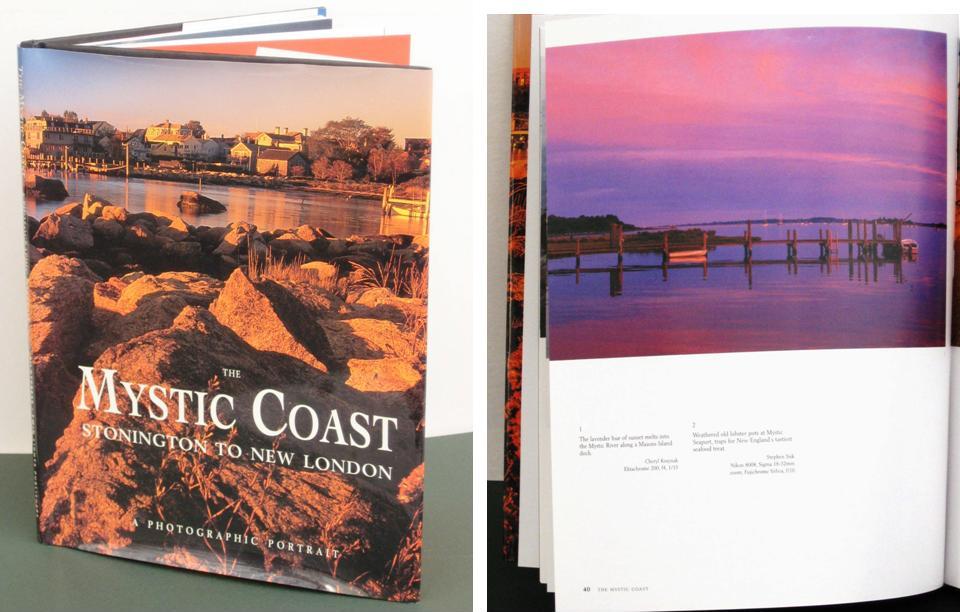
I was remembering recently about a photo of a harbor seal in The Mystic Coast, Stonington to New London: A Photographic Portrait. This is a coffee table book first published in 2000 that is comprised of photographic contributions by amateur photographers, where the publisher and the Mystic Chamber of Commerce selected the images to be included in the book.

Being quite serious with my photography at that time, I submitted a few photos and was lucky to have my image of a sunset off Mason's Island in Mystic printed on page 40. But when I think of this book, I usually recall other contributor photos. This time, I thought about that terrific, rare shot of an Atlantic harbor seal on some rocks at Lord's Point in Stonington. It was taken by Marion Krepcio. Here's her page in the book:


(Seal photo by Marion Krepcio)

The other day in the car, just before 1 p.m., I decided on the spur of the moment that I'd make a quick detour to Groton Long Point. Because the day was sunny with calm winds, I had a feeling it was perfect conditions to see harbor seals sunning themselves on the coastal rocks or shoreline out there. 

Usually times of low tide yield the best results because more rocks are exposed, even in open waters. The shy animals might want to stay farther out than come closer to the developed shoreline. I had no idea what the current tide was, but I took my chances anyway.

At Groton Long point, where I've seen harbor seals only once before (and not because they're infrequent visitors, it's merely that I don't make my way there much in winter), there are only two large rocks way out in the water where they would sun themselves. That's where I intended to look first.

It was unfortunate that the position of the sun caused glare and backlighting, because after I saw with my eyes that there definitely was a moving shape on rock #1 way out in Fishers Island Sound (...and it was huge! It had to be a male) I saw that rock #2 looked lumpier than usual.

I grabbed the binoculars that I keep in the car and saw a small moving head, but as for the number of bodiesand which parts were rock and which were sealI couldn't tell. And there was no way to get closer. I was so thrilled that I at least saw some harbor seals (!!!) and that my hunch they'd be around this day was correct! So I know for sure I saw two heads that day, and that's good enough for me.

It's not unusual to see harbor seals off the Connecticut shore, but it is such a rare treat. The Mystic Aquarium rescues and nurses back to health injured or sick harbor seals that have been reported stranded in our area. Our local paper often features a photo when Aquarium staff release rehabilitated seals back into the wild. They typically do this from a particular beach in Rhode Island, with a cheering audience of Aquarium staff and interested locals. The now-healthy seals find their way to the more open Atlantic waters toward Cape Cod.

So if you want to buy a cool community-created book about this part of New England, go to the link in the first paragraph of this post, or inquire at your local bookstore. This photo shows the book's cover on the left, and my sunset picture (yes, the sky really was fruit punch pink!) on the right:

(Click photo to enlarge)

Monday, August 30, 2010

A True "Happy Place"

The subjects of some of my landscape photos are nearby lighthouses. One of them, Point Judith Light in Narragansett, Rhode Island, isn't yet included because it's a tricky one to photograph. It seems I'm not there when the light has that unique, "just so" quality, or I can't figure a way to get a close-up view and keep the power lines out of the shot. I'm thinking the best vantage point is probably from the ocean, so until I figure this out, you'll only see snapshots on this blog, and not images for sale in my Etsy shop.


I found myself visiting Point Judith Park this past weekend, which really isn't a fancy place. It consists of several acres formally dedicated as "Nulman Park" in memory of Rose Nulman, the mother of the property's former owner. There's a boarded-up building that used to be a restaurant, an aging parking lot, a gazebo, grassy spots and benches aligning the rocky coast, and not so much as a port-a-john for visitors. The Coast Guard station and lighthouse are adjacent.

Normally on summer days everyone is nearby at Camp Cronin, where there is a beach, but when I arrived, the place was packed. It didn't take me long to realize most of the folks were surfers. Often I've discovered that adventures occur when you stumble into situations you didn't plan to attend. The "parking angel" reserved an empty spot for me to park my car among the rows of vehicles crammed into the inadequate lot.

That done effortlessly, I grabbed my camera and headed down to the water. It was low tide, and there were about two dozen surfers out there, but they didn't have the best waves. They did a lot of waiting. I never did find out what the event was, to draw every type of surferman and womanthat I'd ever seen at this spot, known for being a wave-catcher's paradise. But it added to the adventure.

My goal was to get my feet wet and see what I could find among the rocks. The thing about Point Judith is that there is no beach. The rocks aren't big, craggy outcrops to jump and climb on. It's all tumbled rocks, from pebbles, to small stones, to grapefruit- and pumpkin-sized rounds that you can hear rolling out with the surf when strong waves breaking on shore recede. That's why I put on my boat shoesso I had something that made it less painful to walk on the stones than going barefoot, yet I could still get my feet wet.

I was on a mission to find things of interest, and I didn't know what they would be. One time at this spot, I found a ton of tiny shells that I later drilled and strung into a little garland. Another time I found a purple rock. This day, I found a live crab resting comfortably between some rocks, in water about 4 inches deep. I moved onward, and discovered a tiny starfish at the lower corner of another rock. I took a picture of myself holding it before I put it back. Nearby, I saw another baby starfish, this one appearing to be in the process of growing back two appendages.

As a few surfers came ashore, weary of the lackluster waves that side of the lighthouse, I turned to look at the rocks and view of the light station behind me, and noticed something curious. Up toward the high tide line, somebody(s) had created a series of cairns and altars using the available rocks. This isn't a new practice at Point Judith. In fact, more than a year ago someone used only black rocks to form the shape of a cross on the ground. At the same time, a circular fort of stones was created, about 2 1/2 feet high, and has stood ever since. This day, I noticed the circle (which before had an opening at one end) was now fully enclosed, and a little table or altar had been erected in the center.

After taking a few photos of the curious memorials and sacred sculptures, I moved eastward and upward, toward the lighthouse, only to discover more "stone sculpture." Another person had taken small rocks and created a peace sign. Next to that, I saw a plus sign. Next to that was a heart, then an equal sign, the equation ending with a smiley face. Translation: Peace + Love = Happiness.

It was then that I realized that this spot truly is a "happy place." For one, I have never had a bad experience visiting there. There's rarely litter or trash left behind on the grass or rocks. The people seem to appreciate the natural beauty and atmosphere and don't try to bring their harried urban lives with them (i.e. stuff). For a shoreline summer spot, absent are the radios, ice cream vendors, loud vehicles and unruly urchins.

So I wonder...is it because a place without sand and lifeguards attracts only a certain type? Does Point Judith attract rock hounds versus sand-lovers? Maybe people who sense the history and importance of the place are drawn to it with deep respect. The waters off Point Judith have a reputation for being among the most dangerous in the southern New England coastline. A fisherman's memorial sits at nearby Camp Cronin as a testament to the perils of making a living off the sea here. For me, there are spiritual reasons why I am drawn to Point Judith light, but part of the draw for me is also what the area meant to my ancestors.

So I ended my visit with a cursory embrace of the brownstone tower, and as I edged myself to the shady side of it, there at my feet was a bouquet of long-stemmed, white roses (a bit wilted, but still fresh) resting in the grass. I'd like to know the story behind that, but I can't help but realize that white roses symbolize purity, and to find them laid at the foot of a towering lighthouse, I conclude that my "happy place" is more than just a spot created to guide home the ocean-weary; you leave the comfort of the giant arms of this pristine park feeling much, much more loved.

I hope you enjoy these photos (click to enlarge):

And to learn more about Point Judith and other Rhode Island shore points, my eGuide is available at the Beach Bath and Trash website.