Sunday, October 7, 2012

Indian Summer Adventure in Watch Hill, Rhode Island

Sometimes you just know when it's the last good day to do beachy things before the chill of autumn settles in. We had a very short taste of Indian summer this weekend, so I made trip over to my favorite nearby seaside spot, Napatree Point in Watch Hill, Rhode Island.

Napatree Point in Watch Hill, Rhode Island


It was quite breezy and sunny, so good for a walk on the beach, or a sit on the sand, but the wind was making the water quite choppy. The water is too cold for anything but walking in the surf that stretches up onshore.


Right away I found a moon jelly (what was left of it) on the sand. I have never seen a large one of this kind before.

A moon jelly washed ashore with some eelgrass seaweed.


It's really cool to look at up close. I suppose I could have picked it up and washed it off to get a better look, and take better photos, because it felt quite firm when I touched it with my flip flop.

A close-up view of a moon jelly


The rose bush had a few late blooms, but mostly now there are just rose hips hanging brightly among the leaves.

Rose hips are the fruit that grow after the 'Rosa rugosa' blooms have died.


On top of the dunes the goldenrod nears its end. (Click any photo for a larger view.)


I bought a set of plastic sea creature molds at the dollar store earlier this year, and I had the seahorse shape in my backpack. So I decided to make a few and leave them on the sand. I wondered if people would notice when they walked by. This is what it looks like finished:


I didn't plan it this way, but as I was packing up my things to move on down the beach, a parade of visitors suddenly came by. I think there were three groups: a couple, a posse of young people, and two elderly ladies. I found myself getting my answers, as the people walked over or discovered the three seahorses I had made.

The wife in the couple brought the wee sculpture to her husband's attention, but I think she had to poke at the tip of the tail with her foot to confirm what she was seeing. I witnessed the posse barrel through the section where I made my seahorses, but I wasn't sure if this one guy's foot strategically missed a sculpture by coincidence, or if he saw it and lifted his shoe on purpose.

The elderly ladies stopped and spent the most time in contemplation. Finally, the one woman just swept her foot over the lower half of a seahorse and destroyed it. Gee, thanks. At least the people were not freaked out too much by the strange looking things in the sand. If there had been little kids among them, I bet they would have noticed and figured it out faster than the adults.

The flag is flying straight out in the stiff shore breeze.


On the way back to my car, I stopped to take new pictures of the flying horse carousel. This is a famous attraction in Watch Hill because it is the oldest existing carousel where the horses are suspended by chains and thin bars, rather than being affixed to poles. It is circa 1876. The horses "fly" around and the riders can reach for brass rings. The horses have real leather saddles and manes and tails made of real horse hair.
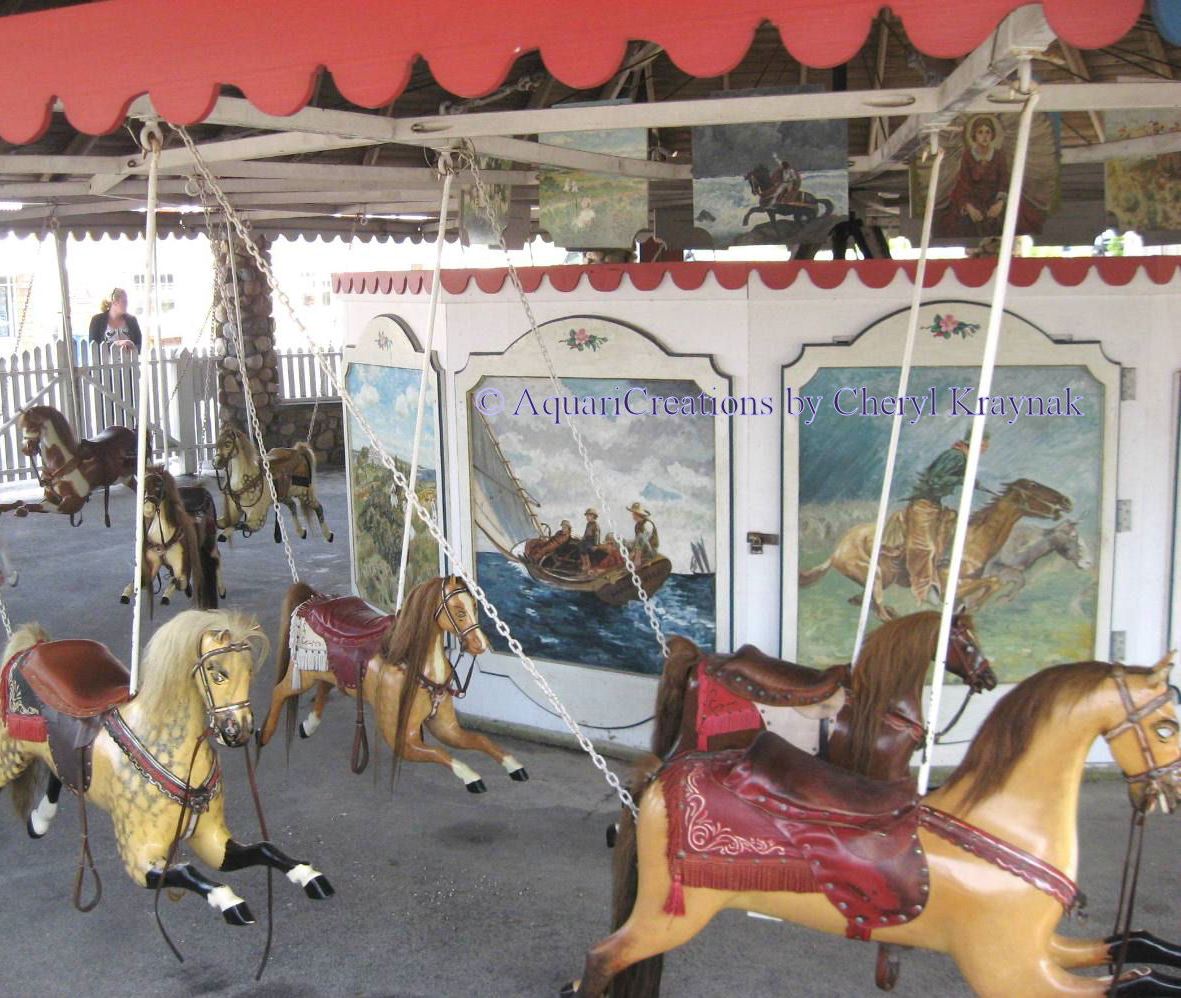


I like the little murals painted all around the center structure.


The carousel plays a variety of music, and as I recall, I even heard the Christmas tune "Sleigh Ride" back during a visit in July. That was a bit weird. The horses will be removed from their chains after Columbus Day, and won't be re-installed until the next summer season begins. Fans of The Candy Box, my favorite sweets shop in Watch Hill, can see a miniature carousel horse in the store's front window.


Oh believe me, the store has much more to offer than gumballs! I don't like that the store is only open seasonally, because they have the best prices for dark chocolate covered orange peels. So I'll have to wait another seven months. But it will be worth it. And with that, another beach season ends.

Until next time...

Cheryl


P.S. - If you'd like to know more about Watch Hill, my Beach eGuide is available at the Beach Bath And Trash website.

Saturday, September 15, 2012

The Cutest Baby Octopus Ever at the Biomes Center in North Kingstown

As I promised in my last post, I am going to introduce you to the cutest baby octopus ever!

Last week I returned to the Biomes Marine Biology Center in Rhode Island to see this new addition for myself. Opal is an Atlantic octopus a reef octopus that was found about 10 feet from shore in Newport, RI, on August 9th. Biomes' owner, Mark Hall, acquires octopuses each year, because their life span is only 12—14 months, and this year he planned to get a specimen in October, like he has in the past.

(UPDATE: December 4, 2012 - Opal has grown big enough to be identified as a Caribbean reef octopus, which is rarely found in New England waters. He was probably carried north on the Gulf Stream and would not have survived the East Coast winter.)

But little opal was found—amazingly, because he was the size of a dime at that point— and suddenly Mark had an early replacement for Coral, who had passed away on July 16th. Coral was one of this year's two octopuses on display at Biomes, the other being Peach (I wrote about them back on July 3rd, in this post). As of last week, Peach was still hanging in there, quite at the end of her lifespan. I plan to feature her in another post soon.

According to Mark, Opal was probably around 2 weeks old when he was found, and it is not easy to determine the gender of the Atlantic octopus species until the end of their life. But Mark has a sixth sense about them, and usually just knows if he has acquired a "he" or a "she" — but as we can see by the name selection, it really doesn't matter.

When I met Opal last week, I saw that he had grown to be about the size of a quarter (to you international folks, that is a U.S. 25-cent piece, and coincidentally approximately 25mm in diameter).

OK, are you ready?

Introducing...Opal the Magnificent!

Opal the Atlantic Octopus at the Biomes Center in Rhode Island


Ta da! 

Yes, there he is, that tiny crimson blob in the back corner of his tank. (Don't worry, close-up photos are next.)

Mark has to feed Opal because the octopus doesn't know how to hunt in this tank. Those two little transparent white marks above Opal in that first photo are little shrimp that share the tank. Normally these are prey, and when I showed up, I witnessed them playing a game of "catch me if you can" with Opal. I saw that the shrimp and Opal were eyeballing each other, and Opal would occasionally make a dash toward the shrimp, but the shrimp always won, escaping with lightning speed.

I think I'll just rest my mantle on this rock.


Eventually, the parties tired of their game, and Opal did a little strolling on his rock and around the pebble bottom of the tank.

It looks like I'm walking, but I'm really not.


Octopuses propel themselves by using a funnel, a part of their body that siphons water from their gills, through and out the funnel forcibly, creating a sort of water jet.


Opal meandered around, giving me ample opportunity to take pictures.


I wonder what the little guy was thinking. I know he wasn't feeling threatened, or else he would have made an ink cloud and escaped to another corner. I wish I could have seen him make an ink cloud, though.


In the center of the tank is a fake plant. I was happy that Opal did a little investigating there, so I could see him spread out his beautiful tentacles. I wonder what it would feel like to hold such a small octopus?

As I mentioned earlier, Mark has to feed Opal frozen crab, but here is a video from September 6th that Mark posted, showing how he is teaching Opal to hunt. You can see those transparent shrimp moving about in the tank, as well as Opal using his "jet propulsion" and using his suction cups on the sides of the glass tank. Enjoy!


If you noticed in the video, there is a flat, gray rock near the fake turtle. There is a hole under that rock, and by the end of my visit, Opal had gone under there to hide. So I felt lucky that he had been active for my viewing pleasure. It will be fun to watch Opal grow bigger and bigger over the next year. What a privilege that is!

Monday, September 10, 2012

It was a Surf's Up! Sunday at Point Judith, Rhode Island

My, oh my, like I've said before: The best adventures are the ones you stumble into blindly. On Sunday I went back to the Biomes Marine Biology Center in Rhode Island to see the new baby octopus, Opal, whom I'll write about in my next post. (You won't want to miss this—the cutest thing you'll ever see!)

Since going to South County, RI, is an hour's drive for me, I usually like to combine my effort with other errands and/or adventures, to make as much out of the trip as possible. So on this day, I planned another attempt to get onto the grounds of the Point Judith lighthouse.

This has been a sore point for me this year. I have made repeated attempts for a full 12 months to get onto the lighthouse property (which is technically government property, as it is Coast Guard operated, but they put "Dept of Homeland Security" on the signs now to make it sound more scary).

The lighthouse at Point Judith in Narragansett, Rhode Island


They usually have the gate open so visitors can walk onto the grounds, and lock it at sundown. But after tropical storm Irene hit the area in August of 2011, I was never able to get back onto the property to see how the "beach" there had changed (I say that in quotes because the shoreline by the lighthouse is all rocks—no sand). There had been some rock "sculptures" there and I wondered if the storm had wiped them out. For more background info, refer to my post from a couple of summers ago, "A True Happy Place."

After Irene blew through, they had the whole area closed for construction, which I guess was a coincidence and nothing to do with the storm. I couldn't get through the fence whenever I drove there.

This past January, I drove by and the construction was worse than ever. I went again in May, well before Memorial Day weekend, and the fence was still locked. I returned again at the beginning of August, and found the fence open, but a wedding was taking place by the lighthouse and there was a sign up, asking the public to respect the privacy of the wedding couple. I felt like the Universe was conspiring to keep me away from the one place in that area where I feel like my soul cannot be denied.

So this weekend, I had no idea what I would find. Would the gate, for some reason, be closed now that it's after Labor Day? Even though it usually isn't?

A great feeling of relief came over me when I drove down Ocean Road and saw people lingering around the lighthouse. And cars—more cars than I have ever seen there—were parked all the way up the road.

The reason? Surf's up!


Point Judith is known as a surfing hotspot, but what I didn't realize is that the wave action created by tropical storm Leslie—even as far out to sea as it was—combined itself with high tide Sunday afternoon...and...well, as you'll see...word got out.

I hurried over the hump of lawn and headed down to the "beach" to see how the landscape had changed. And I got the surprise of my life.

Cairns.

Everywhere.

Somebody...or some bodies...over whatever time period since a year ago August, had created this:


(click on photos for larger views)

Now it's unfortunate that I cannot put a panoramic, up-close viewfinder in this blog, because it's impossible to show how extensive and beautiful it was.


Was the Universe making my heart ache this past year so that I could be greeted with a giant, joyful surprise such as this? I mean, whose idea was it? Have people been feeling the love and adding to the display over the past months, or did just a few folks endeavor to create this all by themselves as a project? I guess I'll never know.

Surf's up at Point Judith, Rhode Island


I counted enough surfers out around the entire Point that it would be accurate to say there were at least 50 of them riding the most excellent waves out there (plus two men riding...er...spinning, I mean...in sea kayaks...not sure if that was on purpose). Sunday at Point Judith is the only time I've seen that many surfers getting such great wave action there.

People had come with their tripods to take photos of their buddies surfing, or for whatever other reason. 

Spectators who don't surf just came to watch, as the clouds from earlier in the day gave way to very warm, late-afternoon sunshine in the dry September air. 

It's addictive to try to get the best photo, or the best video of somebody getting a good ride on the biggest wave.


I must have been there watching for 45 minutes.


It may not be the North Shore of Oahu here, but for these guys (and gals) a day like this comes maybe once or twice a year.


What surprises have you found on your adventures this year?

If you'd like to know more about Point Judith, my Beach eGuide is available at the Beach Bath and Trash website.

Thursday, October 27, 2011

Autumn Surprises at Hammonasset Beach State Park in Madison, CT

This week I found myself driving through Madison, Connecticut, and when I passed the turnoff for Hammonasset Beach State Park, I noticed a sign for their Nature Center at Meigs Point.

That was enough to convince me to make a U-turn and drive down there on a partly cloudy, and not-too-cool late October day. I thought I had been to this park several years ago, but if so, what I found this day was nothing like my memory.

The place is huge, and there are three separate beach entrances with their own parking lots and shelters, so you have your pick of what spot on the 2-mile stretch of beach you want to enjoy. If you're not into sand and surf, there are hiking and biking trails, seasonal camping, fishing, and of course the Nature Center.


Since the Nature Center brought me in, I followed the signs to Meigs Point, the farthest area from the entrance, the southernmost point of the park where it meets Long Island Sound. There is a boat launch is this area, and I first explored the high rocky outcropping which the informational signage revealed to be a "recessional moraine," or a mass of rocks left behind by a retreating glacier.

Hammonasset describes their glacial boulders as "dump truck sized." For all you budding geologists out there, the glaciers long ago advanced as far south as Long Island before they retreated back along southern New England. So our coastline has a lot of deposits of massive boulders that were created during this retreat.


After I explored the view from the edge of Meigs Point, I followed a trail down the hill to the beach, where to my surprise I discovered beach roses, fragrant as they are in June, still blooming in earnest next to red-orange rose hips formed after earlier blossoms expired. Nothing brings me joy faster than seeing and smelling these wonderful beach roses.


Next, I snooped around the Nature Center. Here is a photo of the building:


Behind the building is a wonderful garden where I found monarch butterflies happily slurping nectar from the purple blooms on the butterfly bushes.


There are also walking trails, birdhouses, and some cool seashell sculptures on the grass. These were created by Chan Davis in 1986, and measure at least 4 or 5 feet across. You could sit a small child upon one. Since I was alone, I couldn't take a photo of myself beside one to show scale in the picture below.


This Nature Center is a neat little gem, an attraction within the park attraction. I love what I saw carved into driftwood on their front porch.


Further on, at one of the beach parking areas, I saw abundant juniper berries clustered on the tips of the evergreen branches. Such beautiful color!


I also saw a typical autumn sight around here, the yellow and red-orange of bittersweet berries, although this might be the first time I've seen bittersweet growing in sand!


I might also add that I evaluated the beach at each of the three points of entry, and I already figured out my favorite. I must say, the beach seems to have adequate width, good sand, and clean water, but I suppose I would have to confirm all this during high season.

The only thing that I did not like, which is not related to the park itself, is finding a bunch of balloons washed up on shore. There were three tied together, two of them partially inflated. There was the name of a high-end real estate firm stamped on the latex. Who knows how the balloons got loose. I popped the two inflated balloons before removing the whole thing from the beach, because floating balloons are very dangerous to sea life when, for example, sea turtles might mistake them for jellyfish.

If you enjoyed this post about Hammonasset Beach, read yesterday's post about the butterflies at Harkness Memorial State Park in Waterford, CT. And for more information about Connecticut shoreline parks and beaches, my beach eGuide is available at the Beach Bath And Trash website.

What are you finding at your local state parks this fall?

Wednesday, October 26, 2011

Butterflies Galore at Harkness Memorial State Park in Waterford, CT

Autumn in southern Connecticut hasn't been as spectacular this year because a lot of foliage near the shoreline died early or was damaged by the salt spray from tropical storm Irene at the end of August.

But I've made a couple trips recently to area state parks and was happy to see so much other living beauty that I forgot that there isn't much to look at as far as fall foliage.

This post will focus on the first journey, to Harkness Memorial State Park in Waterford, Connecticut.


I have loved Harkness since the first time I ever went there, in the late 1980s. There is a small beach; a wide expanse of lawn where families enjoy kite flying and picnics; the remains of the Harkness estate buildings, which includes a seaside mansion available for weddings and other functions; and formal and cutting gardens that add to the picturesque beauty. Not to mention the acres and acres of marshland and other property.


(The loggia near the mansion's formal garden)


(One of several garden gates at Harkness.)


(The old pet cemetery under century-old Japanese maple trees.)

The day I visited was a rare fall day without excessive wind off the water. I remember a few years ago when I took the mansion tour that the guide said Mrs. Harkness detested the fact that it was often so windy there. I think I would agree if I had to live on that property, as shore points can be bitterly cold or uncomfortable because of the wind sometimes.

My plan was to explore the beach first, and I was glad to do so because they had just fixed the damaged boardwalk the prior week, one of the casualties of Irene. I walked the length of this short, sandy beach to the rocky, less popular end, and was amazed to discover two things:

1) The most ginormous amount of slipper shells I have ever seen in my life, and

2) A creative use of them, thanks to somebody named Adrian.

First, a look at part of the mass of shells:


Here is a closeup shot of the slipper shells (click to photo to make it even bigger!):


Then I turned around and saw that somebody had used piles of these thumb-sized shells to form a heart in the sand. Inside it said "Adrian" and something else below that, but I couldn't figure it out. It was so great to see the love on this remote end of the park! (Click on the heart to zoom in.)


I left the beach area to head back to the lawn and saw a few monarch butterflies gathered on some wild asters growing beside the marsh grasses. Being well into October, I was surprised to see so many butterflies still hanging around, but then I figured they probably know more than I do!

The butterflies must know that they are safe, since they go about their business and don't seem afraid of people going right up and touching them! How often does that happen in your backyard?
I continued on, to the formal and cutting gardens near the mansion, and found more...and more monarch butterflies!


(The cutting garden in full bloom.)

Butterflies on dahlias, butterflies on chrysanthemums, butterflies on straw flowers!


I am so happy with these photos I got!


I'll save the best photo for last:


Which just goes to show you that sometimes the best fall colors have nothing to do with tree foliage!

Check back tomorrow for my post about my visit to Hammonasset Beach State Park in Madison, CT. More surprises await!

And for detailed information about Connecticut parks and beaches, my eGuide is available at the Beach Bath and Trash website.

Cheryl

Monday, July 18, 2011

What is a Dugong?...and...Manatee Love

A dugong is a mammal of the Indian Ocean. It's a type of sea cow that closely resembles what Americans know as the manatee. The dugong's cousin, the manatee, is different in physical characteristics and distribution.

Manatees and dugongs inhabit opposite sides of the planet. There are three species of manatees that are found along the coastlines and rivers of Atlantic, Caribbean, Gulf, and South American areas.

Then there are West African manatees, which live along the central part of the west coast of Africa, and in that continent’s inland rivers. (The kind found in Florida and the Caribbean, in Mexico along the Gulf coast, and along the northern coast of South America are considered West Indian manatees.)

I love manatees and am eager for the day when I can share up-close moments with them in person. It would be a lifetime treat to get to see a dugong in the wild, as I don't have any plans to visit areas of the Indian Ocean where they live.

I know some of my readers are in Florida, so let me tell you...I am so envious how many opportunities you have to visit manatees. Last summer, though, a manatee was spotted in a marina here in Connecticut, and it also happened the previous fall, but it is quite an unusual occurrence this far north. Often those northward wanderers encounter problems getting back to Florida, and are monitored by the Save the Manatee Club in Maitland, Florida.

One day I will adopt a manatee (or two) through the club. Each animal has its own history and it's so hard to decide which one to adopt! It would be nice to visit some and adopt in person!

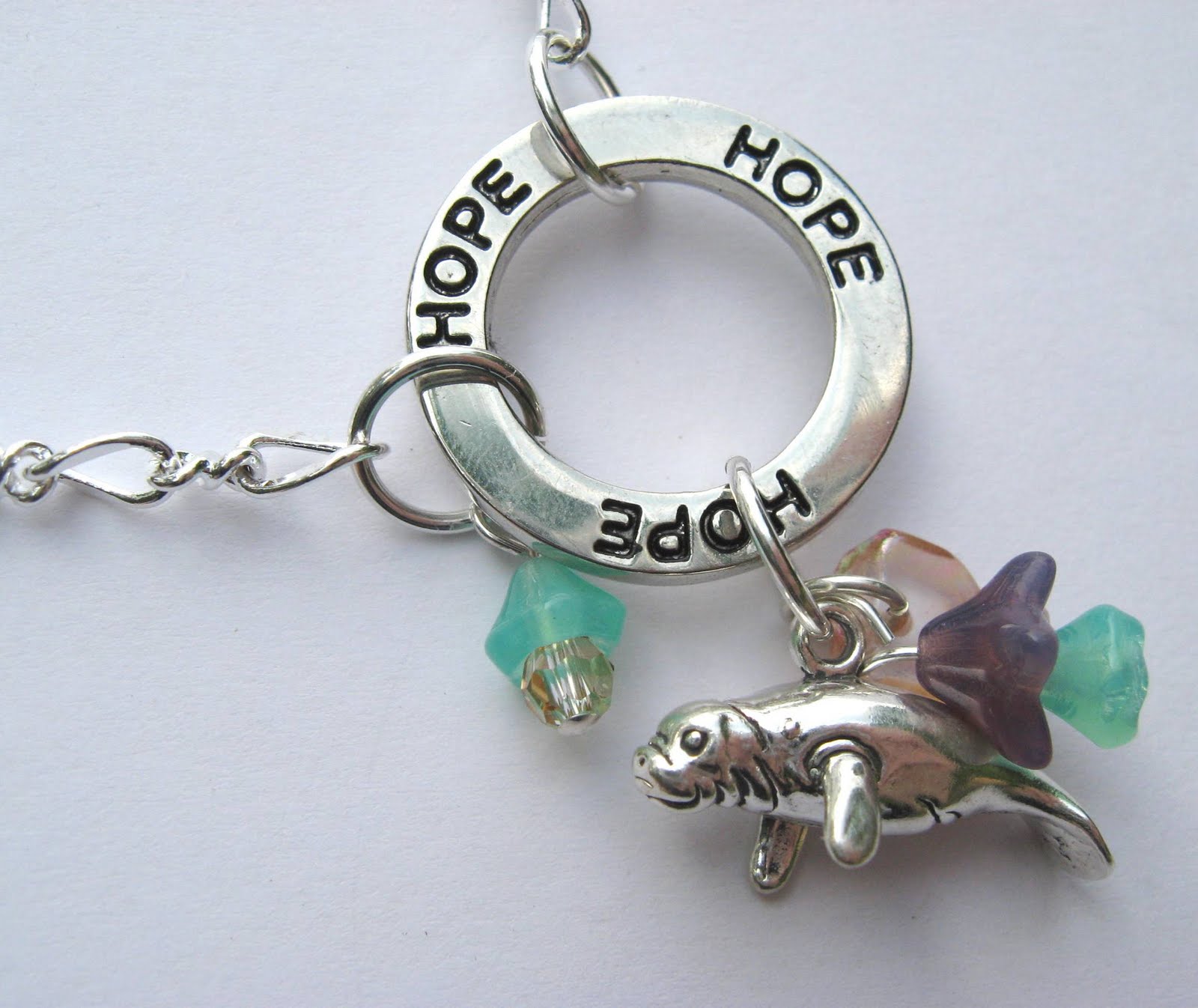
When the Gulf oil spill occurred, an Etsy shop opened up to raise funds for disaster relief, and I made a manatee necklace to donate. I am so glad that the recipient of my necklace enjoyed it because of her love for the manatee, and that our collective love for the manatee resulted in the proceeds of our effort going to help all plant and marine life in the affected area.

Here's are pictures of two versions of my manatee necklace.


Believe me, I'd make more necklaces like this to sell, because I know there are a lot of manatee lovers out there. But the manatee charm is solid, cast sterling silver, and it's cost prohibitive to keep an inventory of manatee charms (see my blog post about the price of silver here).

Cheers,

Cheryl

Friday, January 7, 2011

Harbor Seal Sighting in Connecticut and "The Mystic Coast: A Photographic Portrait"

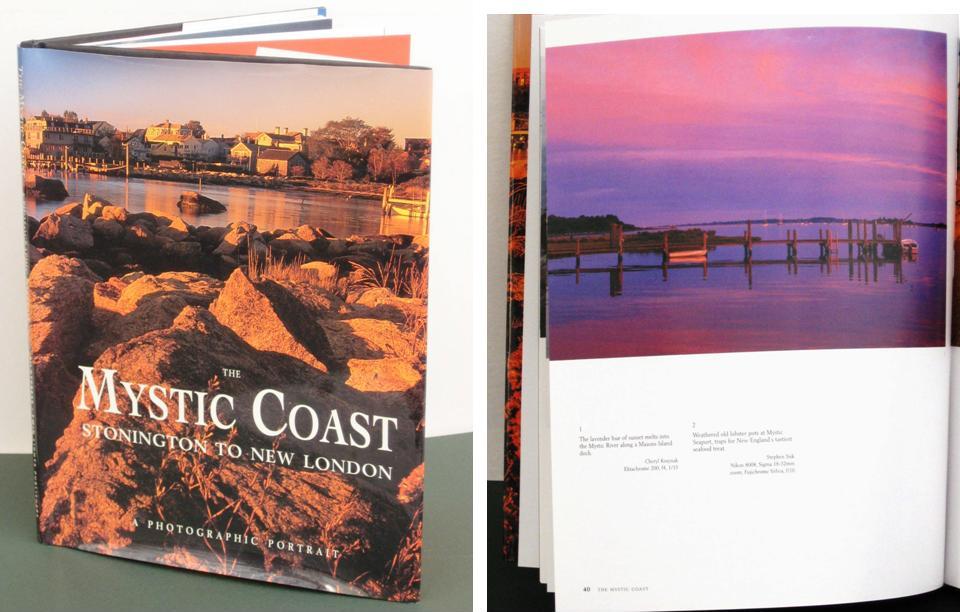
I was remembering recently about a photo of a harbor seal in The Mystic Coast, Stonington to New London: A Photographic Portrait. This is a coffee table book first published in 2000 that is comprised of photographic contributions by amateur photographers, where the publisher and the Mystic Chamber of Commerce selected the images to be included in the book.

Being quite serious with my photography at that time, I submitted a few photos and was lucky to have my image of a sunset off Mason's Island in Mystic printed on page 40. But when I think of this book, I usually recall other contributor photos. This time, I thought about that terrific, rare shot of an Atlantic harbor seal on some rocks at Lord's Point in Stonington. It was taken by Marion Krepcio. Here's her page in the book:


(Seal photo by Marion Krepcio)

The other day in the car, just before 1 p.m., I decided on the spur of the moment that I'd make a quick detour to Groton Long Point. Because the day was sunny with calm winds, I had a feeling it was perfect conditions to see harbor seals sunning themselves on the coastal rocks or shoreline out there. 

Usually times of low tide yield the best results because more rocks are exposed, even in open waters. The shy animals might want to stay farther out than come closer to the developed shoreline. I had no idea what the current tide was, but I took my chances anyway.

At Groton Long point, where I've seen harbor seals only once before (and not because they're infrequent visitors, it's merely that I don't make my way there much in winter), there are only two large rocks way out in the water where they would sun themselves. That's where I intended to look first.

It was unfortunate that the position of the sun caused glare and backlighting, because after I saw with my eyes that there definitely was a moving shape on rock #1 way out in Fishers Island Sound (...and it was huge! It had to be a male) I saw that rock #2 looked lumpier than usual.

I grabbed the binoculars that I keep in the car and saw a small moving head, but as for the number of bodiesand which parts were rock and which were sealI couldn't tell. And there was no way to get closer. I was so thrilled that I at least saw some harbor seals (!!!) and that my hunch they'd be around this day was correct! So I know for sure I saw two heads that day, and that's good enough for me.

It's not unusual to see harbor seals off the Connecticut shore, but it is such a rare treat. The Mystic Aquarium rescues and nurses back to health injured or sick harbor seals that have been reported stranded in our area. Our local paper often features a photo when Aquarium staff release rehabilitated seals back into the wild. They typically do this from a particular beach in Rhode Island, with a cheering audience of Aquarium staff and interested locals. The now-healthy seals find their way to the more open Atlantic waters toward Cape Cod.

So if you want to buy a cool community-created book about this part of New England, go to the link in the first paragraph of this post, or inquire at your local bookstore. This photo shows the book's cover on the left, and my sunset picture (yes, the sky really was fruit punch pink!) on the right:

(Click photo to enlarge)